
That Music Degree Everyone Said Was Impractical? It Just Became Your Most Valuable Asset
Remember when family members questioned your decision to pursue music? When well-meaning relatives asked about your “backup plan”? When you defended your degree choice while secretly worrying they might be right?
Turns out they were wrong. Your music degree is incredibly practical—just not in the way anyone expected.
The Application Nobody Told You About
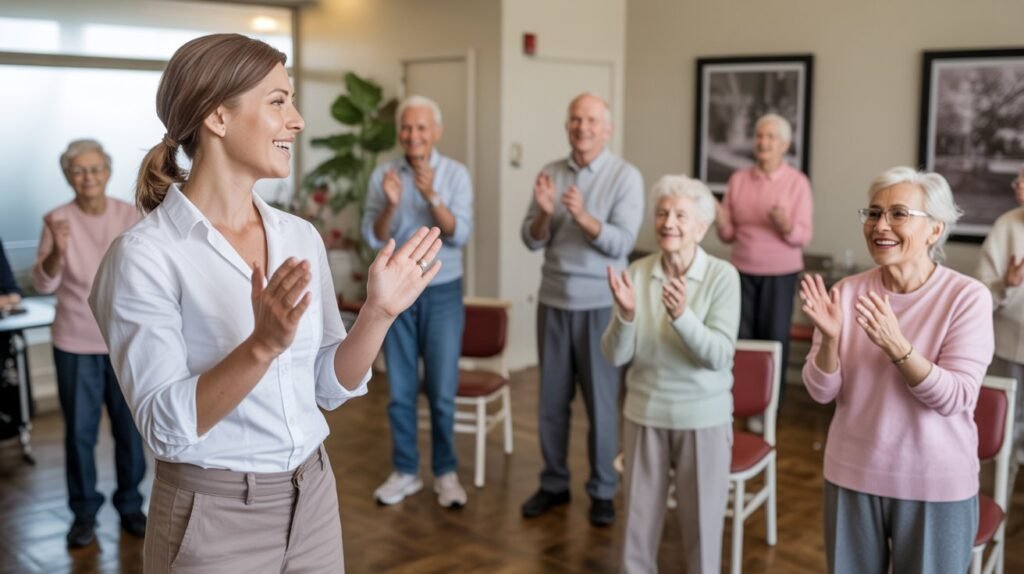
Music programs prepare students for performance, education, or music therapy. Those are presented as the viable paths. But there’s a fourth option that’s been hiding in plain sight: senior wellness instruction using rhythm-based programming.
This isn’t a consolation prize for musicians who “couldn’t make it.” It’s a specialized application of musical expertise to a population experiencing unprecedented growth and desperate need.
Why Your Music Theory Classes Actually Matter
All those hours analyzing harmonic progressions and rhythmic structures? They’re directly applicable to designing therapeutic rhythm activities for cognitive stimulation.
Understanding how rhythm affects neural processing, how patterns create predictability and safety, how syncopation challenges attention—this theoretical knowledge becomes intensely practical when working with seniors experiencing cognitive decline.
You can create sophisticated programming that uses rhythmic complexity therapeutically. Instructors without music theory backgrounds simply cannot design activities with this level of nuance.
Your Ear Training Translates Unexpectedly
The ability to hear subtle variations, identify when someone’s struggling to maintain rhythm, recognize individual voices within ensemble playing—these skills prove invaluable when teaching mixed-ability senior groups.
You’ll notice when a dementia patient suddenly locks into rhythm after appearing disengaged. You’ll hear hesitation that indicates someone needs different cueing. You’ll recognize moments when the group achieves synchronization that creates profound connection.
This auditory awareness, developed through years of training, enables responsive teaching that meets participants exactly where they are.
Your Performance Anxiety Prepared You
Every musician knows performance anxiety. That experience of functioning under pressure, reading audiences, recovering from mistakes, adapting when things don’t go as planned—all of it prepares you for leading senior wellness classes.
Working with dementia patients requires comfort with unpredictability. Classes never go exactly as planned. You’ll need to adapt constantly, stay calm when participants become confused or agitated, and create positive experiences despite chaos.
Your performance background already taught you these skills. You just didn’t realize they’d apply outside concert halls.
Your Ensemble Experience Is Gold
Playing in orchestras, bands, or chamber groups taught you to listen while leading, blend individual contributions into unified sound, and manage group dynamics. These are precisely the skills needed to facilitate senior rhythm classes.
You understand how to create space for individual expression within group structure. You know how to cue entrances, manage tempo, and bring diverse players together. These concepts translate directly to leading seniors with varying abilities in shared musical experiences.
The Pedagogy You Already Developed
If you’ve taught private lessons or led sectionals, you’ve already developed teaching skills that transfer seamlessly: breaking complex concepts into digestible pieces, identifying and correcting technical issues, finding multiple ways to explain the same concept, celebrating small victories to build confidence.
These pedagogical skills work identically when teaching seniors—you’re just adapting them for different learners with different challenges.
What Your Degree Didn’t Teach (But InstruMix Does)
Your music degree gave you deep musical knowledge. What it didn’t provide: understanding how aging affects musical processing, techniques for working with dementia and cognitive impairment, methods for adapting activities for limited mobility, business skills for building an independent practice, and knowledge of senior care environments and protocols.
InstruMix certification fills these specific gaps, showing you how to apply your existing musical expertise to senior wellness contexts.
The Career Your Degree Actually Prepared You For
Your music degree wasn’t impractical. Music education just failed to show you all the applications.
Senior wellness instruction uses:
- Your rhythmic knowledge
- Your theoretical understanding
- Your performance skills
- Your teaching ability
- Your ensemble experience
- Your musical sensitivity
Every component of your musical training applies. You’re not abandoning music—you’re discovering its most meaningful application.
The Validation You Deserve
For years, you’ve defended your degree choice. You’ve justified your passion. You’ve struggled financially while doing work you love.
InstruMix offers validation: your musical training has immense practical value. Communities need your expertise. Your degree prepared you for meaningful, sustainable work that genuinely improves lives.
The music degree everyone questioned? It just became your pathway to career stability and purpose.
Discover how your music degree translates into rewarding senior wellness work.